Tiezheng vertical machining centers are reviewed for milling, drilling, tapping and fixture-based CNC machining projects where buyers need visible machine proof, model-range context and clear RFQ inputs. Use the images to review machine layout and workshop context. Confirm the exact model specifications and supplied configuration with your contact.
Vertical milling, drilling, tapping, boring and fixture-based CNC machining review. Final process capability depends on the selected model, tooling, fixture and workpiece drawing.
Workpieces
Fixture-ready metal parts, plates, housings, brackets, molds and repeat machining workpieces where a vertical machining center is suitable after drawing review.
Materials
Project-specific steel, cast iron, aluminum, brass or mixed metal materials. Confirm material grade, blank condition and cutting allowance during RFQ.
Capacity
Model-specific. Select the V-series machine by work envelope, table load, spindle/tooling needs, fixture height and required operation sequence after engineering review.
Spindle / power
Model-specific spindle and tool magazine configuration. Confirm spindle taper, speed range, tool capacity and cutting requirements before quotation.
Axis / stations
Primarily vertical machining center configuration; optional fourth-axis or fixture-system review depends on the selected model and workpiece.
Automation
fixture-system
Control system
Project-specific CNC control configuration. Confirm control preference and service requirements during RFQ.
Options
Workholding fixtures, fourth-axis review, tool magazine selection, chip and coolant handling, guarding, probing or inspection workflow, and acceptance test requirements.
What is this machine used for?
Tiezheng vertical machining centers provide a starting route for discussing milling, drilling, tapping and boring with vertical spindle access. Compare the published models against the part dimensions, fixture, tools and axis travels. A model’s table size or spindle speed alone does not establish the required accuracy or cycle time. Your contact confirms the configuration for the intended operation.
When is a vertical machining center worth reviewing?
Review this route when the required surfaces can be reached from a vertical spindle with a suitable fixture. Check whether additional setups, rotary positioning or another machine layout are needed. Material, cutting load and finished-part requirements must be assessed for the exact configuration.
V840 vs V850 vs V855: how do table size and travel differ?
This comparison covers published table, travel and load values only. Cutting access, fixturing, tool reach, spindle choice and required tolerances still need confirmation against your part. Similar appearance does not establish identical machining capacity. Open the exact model links for all specifications, then discuss the same drawing, quantity and configuration requirements with your contact.
V840 vs V850 vs V855: how do table size and travel differ?
Read each model’s published dimensions, axis travels, workpiece limits and load ratings separately. Check the complete part, fixture, tool assembly and clearances. These values are not a guarantee that all limits can be used simultaneously. Confirm the control, spindle, tooling and standard or optional equipment for the supplied configuration.
How should I use the machine images and specifications?
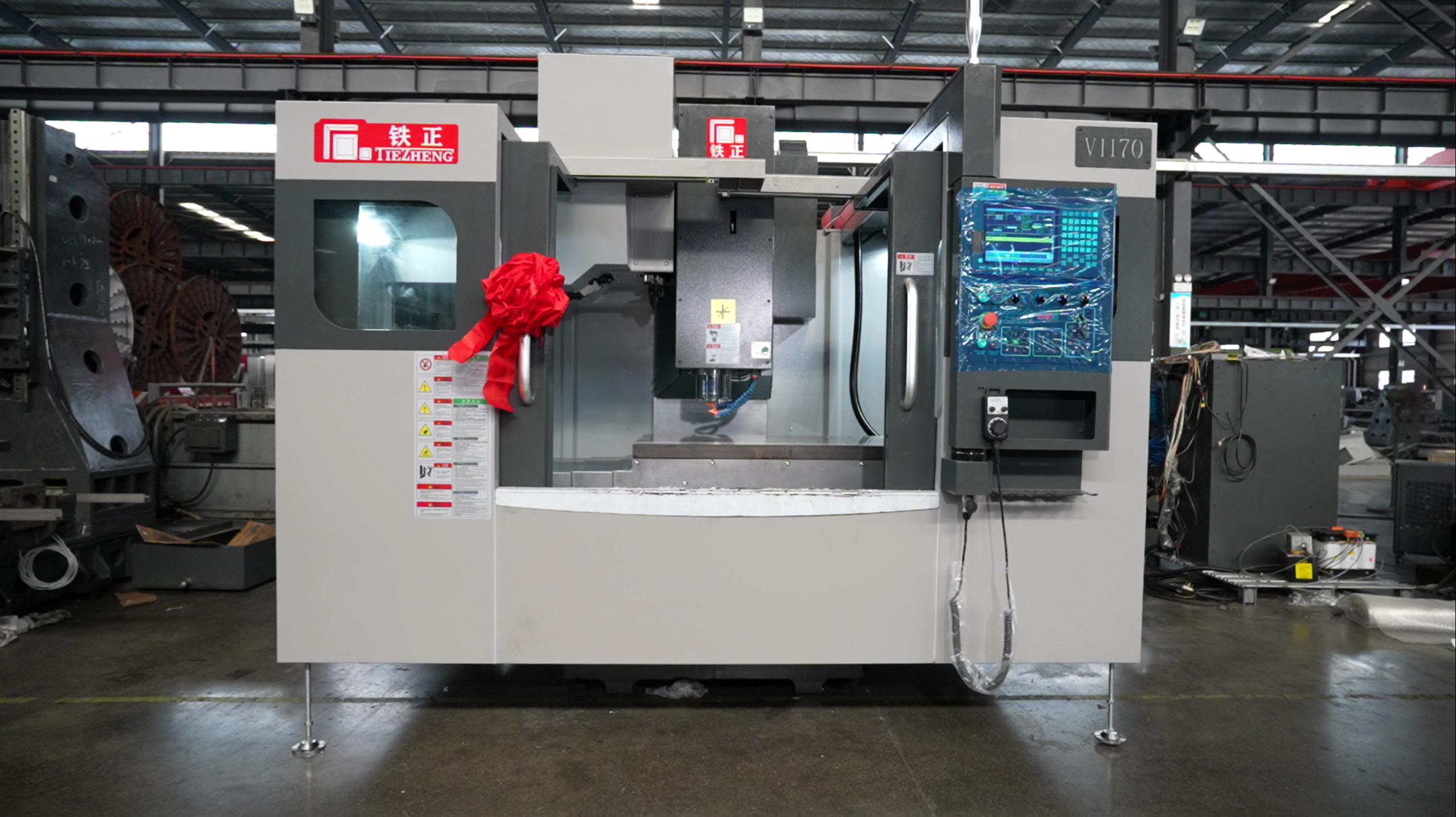
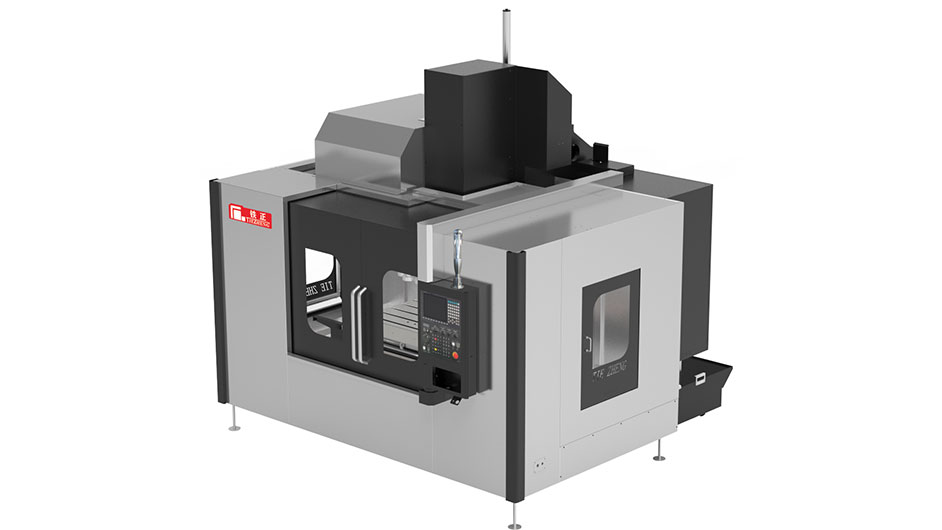
Images show the machine form and workshop context. They do not establish finished-part accuracy, cycle time, material suitability or certificate coverage. Open the exact model’s specification table to check labels, units and configuration notes. Ask the listed contact for any missing value; an omitted value is not zero.
Workshop reference image, not a model-specific configuration photograph.
Configuration illustration, not a photograph of this exact model. Confirm the supplied equipment with your sales contact.
What information helps your contact review the application?
The operations and faces to be machined, with part dimensions and total part-and-fixture weight if known.
Material grade, blank condition, critical tolerances, surface requirements and the proposed inspection method.
Workholding concept, tool access, loading method, production quantity and any target cycle time.
Destination country, control preference, utilities and installation or training requirements.
A model choice and drawing are optional at first contact. Describe the part or operation you know. Agree a suitable channel for confidential drawings directly with your representative. Configuration, delivery, acceptance and the formal quotation are confirmed by that contact, not automatically by this website.
How are documentation and service confirmed?
Certificate resources support document review; they are not blanket approval for every model, option or destination. Confirm the exact model, certificate scope and destination-market requirements. Installation, training, spare parts, inspection and support responsibilities must be agreed for the order.
Does the largest published dimension prove that my part fits?
No. Review the complete part, fixture, tools, axis movements, loading access and clearances together. Separate maximum values are not a combined machining envelope.
Can I select a material or industry and treat the result as approved?
No. Those inputs describe the intended work. Material grade, cutting plan, required accuracy and production conditions need individual review; a category label is not qualification for an industry.
Is automation or driven tooling always included?
No. Confirm the exact equipment, interfaces, guarding and standard or optional scope for the model and order.
Can I ask a question without a model or drawing?
Yes. Start with your part or operation. Your contact can identify the information needed for a configuration discussion and confirm the quotation directly.
The video links below are verified WordPress Media Library files. Use them as visual references for model layout, workshop context and operation discussion; final capability still depends on the selected configuration and workpiece drawing.
Compare the models below using their specifications, product photos and videos. Confirm the final configuration against your part drawing and production requirements.
Workshop reference image, not a model-specific configuration photograph.
The Tiezheng V1160 is a V-series vertical machining center with a 1200 x 600 mm table, 1100 x 600 x 600 mm X/Y/Z travel and a 1000 kg table load. The reviewed source sheet records an
The Tiezheng V1168 is a V-series vertical machining center with a 1200 x 600 mm table, 1100 x 600 x 800 mm X/Y/Z travel and a 1000 kg table load. The reviewed source sheet records an
The Tiezheng V1377 is a V-series vertical machining center with a 1400 x 700 mm table, 1300 x 700 x 700 mm X/Y/Z travel and a 1300 kg table load. The reviewed source sheet records an
The Tiezheng V1377C is a vertical machining center shown in first-party factory footage. Published specifications list a worktable load of up to 1 tonne and X/Y/Z travel of 1300/700/700 mm; the footage also shows a three-axis
The Tiezheng V1380C is a V-series vertical machining center with a 1400 x 800 mm table, 1300 x 800 x 700 mm X/Y/Z travel and a 1500 kg table load. The reviewed source sheet records a
The Tiezheng V1387 is a V-series vertical machining center with a 1400 x 800 mm table, 1300 x 800 x 700 mm X/Y/Z travel and a 1400 kg table load. The reviewed source sheet records an
The Tiezheng V1680C is a V-series vertical machining center with a 1700 x 800 mm table, 1600 x 800 x 700 mm X/Y/Z travel and an 1800 kg table load. The reviewed source sheet records a
The Tiezheng V2010C is a V-series vertical machining center with a 2100 x 1000 mm table, 2000 x 1000 x 800 mm X/Y/Z travel and a 2200 kg table load. The reviewed source sheet records a
The Tiezheng V640 is a compact V-series vertical machining center with 600 x 400 x 400 mm X/Y/Z travel, a 700 x 400 mm table and a 350 kg table load. It uses a 10,000 rpm
The Tiezheng V840 is a V-series vertical machining center with 800 x 400 x 400 mm X/Y/Z travel, a 1000 x 400 mm table and a 400 kg table load. It uses a 10,000 rpm belt-drive
The Tiezheng V850 is a V-series vertical machining center with a 1000 x 500 mm table, 800 x 500 x 500 mm X/Y/Z travel and a 500 kg table load. The reviewed source sheet records a
The Tiezheng V855 is a V-series vertical machining center with a 1000 x 550 mm table, 800 x 550 x 550 mm X/Y/Z travel and a 600 kg table load. The reviewed parameter sheet records an
The Tiezheng V856 is a vertical machining center for buyer application screening. Published specifications confirm a 1,000 × 500 mm worktable, 800/500/600 mm X/Y/Z travel, 500 kg worktable load, standard 8,000 rpm spindle speed, 11 kW
The Tiezheng V858 is a V-series vertical machining center with 800 x 550 x 800 mm X/Y/Z travel, a 1000 x 550 mm table and a 600 kg table load. Its documented spindle uses an 8,000
The V875 is a vertical machining center with catalog-documented 800/700/550 mm X/Y/Z travel, a 1000 x 700 mm table, 700 kg maximum table load, BT40-150 spindle taper, 11 kW spindle power and a 24-tool arm-type magazine.
The Tiezheng V876 is a vertical machining center with 750 mm X-axis travel, 700 mm Y-axis travel and 600 mm Z-axis travel. Final process suitability, supplied configuration, performance, acceptance requirements, delivery and commercial terms are confirmed
The V878 is a vertical machining center with catalog-documented 800/700/800 mm X/Y/Z travel, a 1000 x 700 mm table, 700 kg maximum table load, BT40-150 spindle taper, 11 kW spindle power and a 24-tool magazine capacity.
The Tiezheng V966 is a V-series vertical machining center with 900 x 600 x 600 mm X/Y/Z travel, an 1100 x 700 mm table and a 700 kg table load. Its documented spindle uses an 8,000
The Tiezheng VB855 is a vertical machining center identified in continuous first-party factory footage. Its verified public specification set is limited to 800 mm X-axis travel, 550 mm Y-axis travel and 550 mm Z-axis travel. All
The Tiezheng VF1010C-2 is a VF-series twin-spindle vertical machining center documented with two spindles, two Z axes, a 2100 x 1000 mm table and 1000 x 1000 x 800 mm X/Y/Z travel. The reviewed matrix lists
The Tiezheng VF1070-2 is a VF-series twin-spindle vertical machining center documented with two spindles, two Z axes, a 2000 x 700 mm table and 1100 x 700 x 600 mm X/Y/Z travel. The reviewed matrix lists
The Tiezheng VF550-2 is a VF-series twin-spindle vertical machining center documented with two spindles, two Z axes, a 1000 x 500 mm table and 550 x 550 x 550 mm X/Y/Z travel. The reviewed matrix lists
The Tiezheng VF660-2 is a VF-series twin-spindle vertical machining center documented with two spindles, two Z axes, a 1200 x 600 mm table and 620 x 600 x 600 mm X/Y/Z travel. The reviewed matrix lists
The Tiezheng VF860-2 is a VF-series twin-spindle vertical machining center documented with two spindles, two Z axes, a 1700 x 600 mm table and 810 x 600 x 600 mm X/Y/Z travel. The reviewed matrix lists
The Tiezheng VF870-2 is a VF-series twin-spindle vertical machining center documented with two spindles, two Z axes, a 1700 x 700 mm table and 810 x 700 x 600 mm X/Y/Z travel. The reviewed matrix lists
The Tiezheng VF880C-2 is a VF-series twin-spindle vertical machining center documented with two spindles, two Z axes, a 1700 x 800 mm table and 800 x 800 x 700 mm X/Y/Z travel. The reviewed matrix lists
The Tiezheng VS650 is a vertical dual-pallet linear-guide machining center documented with two 650 x 500 mm tables, 1600 x 550 x 500 mm X/Y/Z travel and a 500 kg maximum table load. The reviewed source
V1055 is a vertical machining center with 1000 × 500 × 500 mm X/Y/Z travel, a 1100 × 500 mm table and a listed maximum table load of 800 kg. Its 7.5 kW spindle motor and
The V1140 is listed under vertical machining centers in the Tiezheng catalogue. Table size: 1200 × 400 mm; X/Y/Z-axis travel: 1100 × 400 × 400 mm. Published dimensions and spindle data do not approve a workpiece
The V1160C is listed under vertical machining centers in the Tiezheng catalogue. Table size: 1200 × 600 mm; X/Y/Z-axis travel: 1100 × 600 × 600 mm. Published dimensions and spindle data do not approve a workpiece
V1176 is a vertical machining center with 1100 × 700 × 600 mm X/Y/Z-axis travel, a 1200 × 700 mm table and an 800 kg maximum table load. The standard belt-drive spindle is listed at 8000
V1355 is a vertical machining center with a 1400 × 500 mm table, 1300 × 550 × 550 mm X/Y/Z-axis travels and a stated maximum table load of 800 kg. The standard belt-driven spindle is specified
The V2510C is listed under vertical machining centers in the Tiezheng catalogue. Table size: 2600 × 1000 mm; X/Y/Z-axis travel: 2500 × 1000 × 800 mm. Published dimensions and spindle data do not approve a workpiece
The V855C is listed under vertical machining centers in the Tiezheng catalogue. Table size: 1000 × 550 mm; X/Y/Z-axis travel: 800 × 550 × 550 mm. Published dimensions and spindle data do not approve a workpiece
The V986 is listed under vertical machining centers in the Tiezheng catalogue. Table size: 1100 × 800 mm; X/Y/Z-axis travel: 900 × 800 × 600 mm. Published dimensions and spindle data do not approve a workpiece
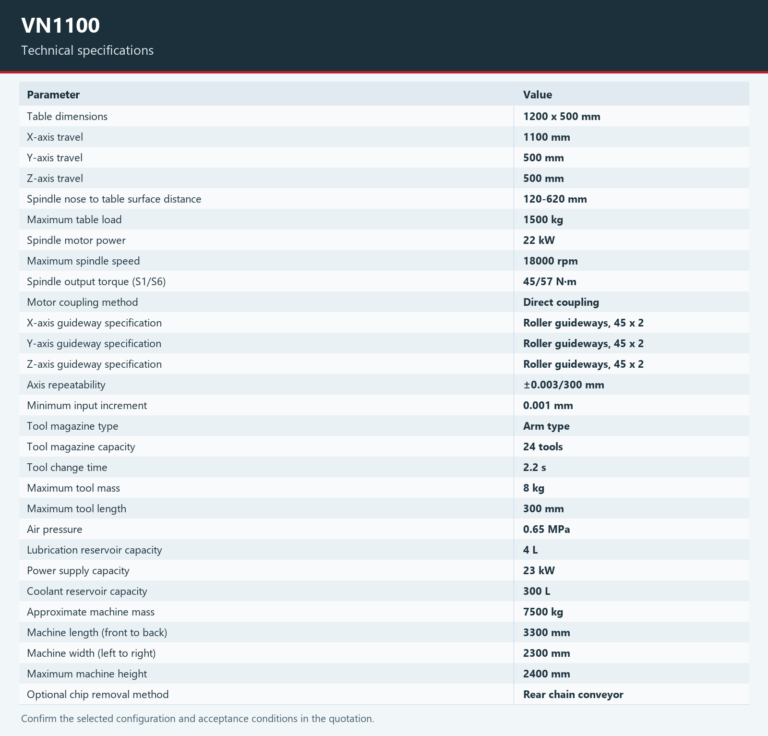
The VN1100 is a ram-type vertical machining center with X/Y/Z travels of 1100/500/500 mm. Its listed table dimensions are 1200 x 500 mm. Review travel, table size, fixture height and supported load separately. Confirm the spindle
The VN1600 is a ram-type vertical machining center with X/Y/Z travels of 1600/500/500 mm. Its listed table dimensions are 1700 x 500 mm. Review travel, table size, fixture height and supported load separately. Confirm the spindle
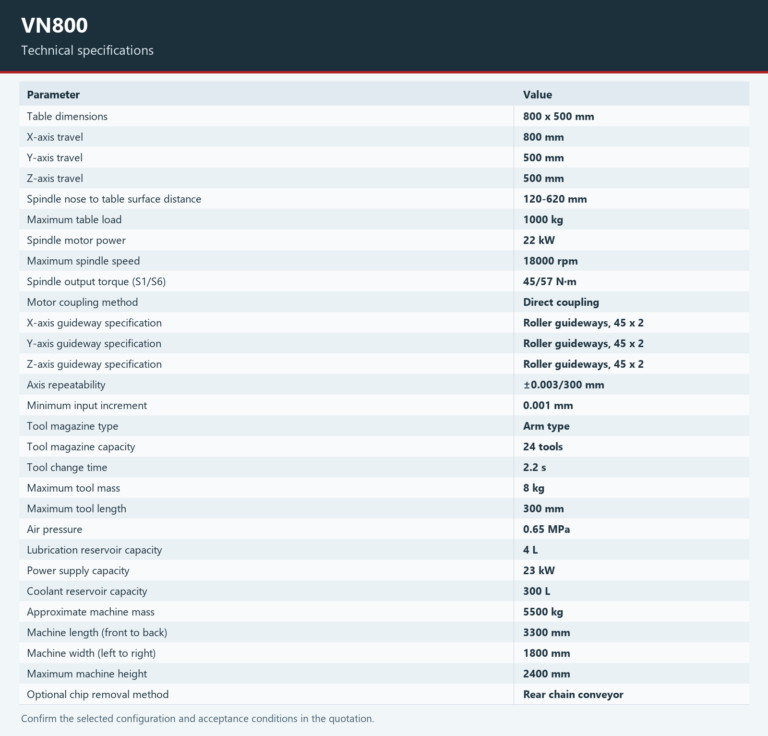
The VN800 is a ram-type vertical machining center with X/Y/Z travels of 800/500/500 mm. Its listed table dimensions are 800 x 500 mm. Review travel, table size, fixture height and supported load separately. Confirm the spindle
The VS950 is listed under vertical machining centers in the Tiezheng catalogue. Pallet size: 900 × 500 mm; Number of pallets: 2 count. Published dimensions and spindle data do not approve a workpiece setup. Compare the
The VSF950 is listed under vertical machining centers in the Tiezheng catalogue. Pallet size: 900 × 500 mm; Number of pallets: 2 count. Published dimensions and spindle data do not approve a workpiece setup. Compare the
Optional analytics helps us understand website visits and saved inquiries. Optional marketing measures advertising visits with Meta. Both stay off until you choose. Rejecting does not affect browsing or inquiries.