How to Choose a Rotary Transfer Machine: 5 Critical Parameters
A practical selection guide covering station count, cycle time targets, control systems, and supplier evaluation — based on real shop-floor experience.
Selecting a rotary transfer machine is a strategic decision that impacts your production capacity, cost-per-part, and long-term flexibility. Unlike standard CNC lathes, a rotary transfer machine processes multiple operations simultaneously across several stations. This guide walks you through the five critical parameters you must evaluate before investing — and shows how APEX SPM helps manufacturers slash cycle times by up to 70%.
📌 In this guide:
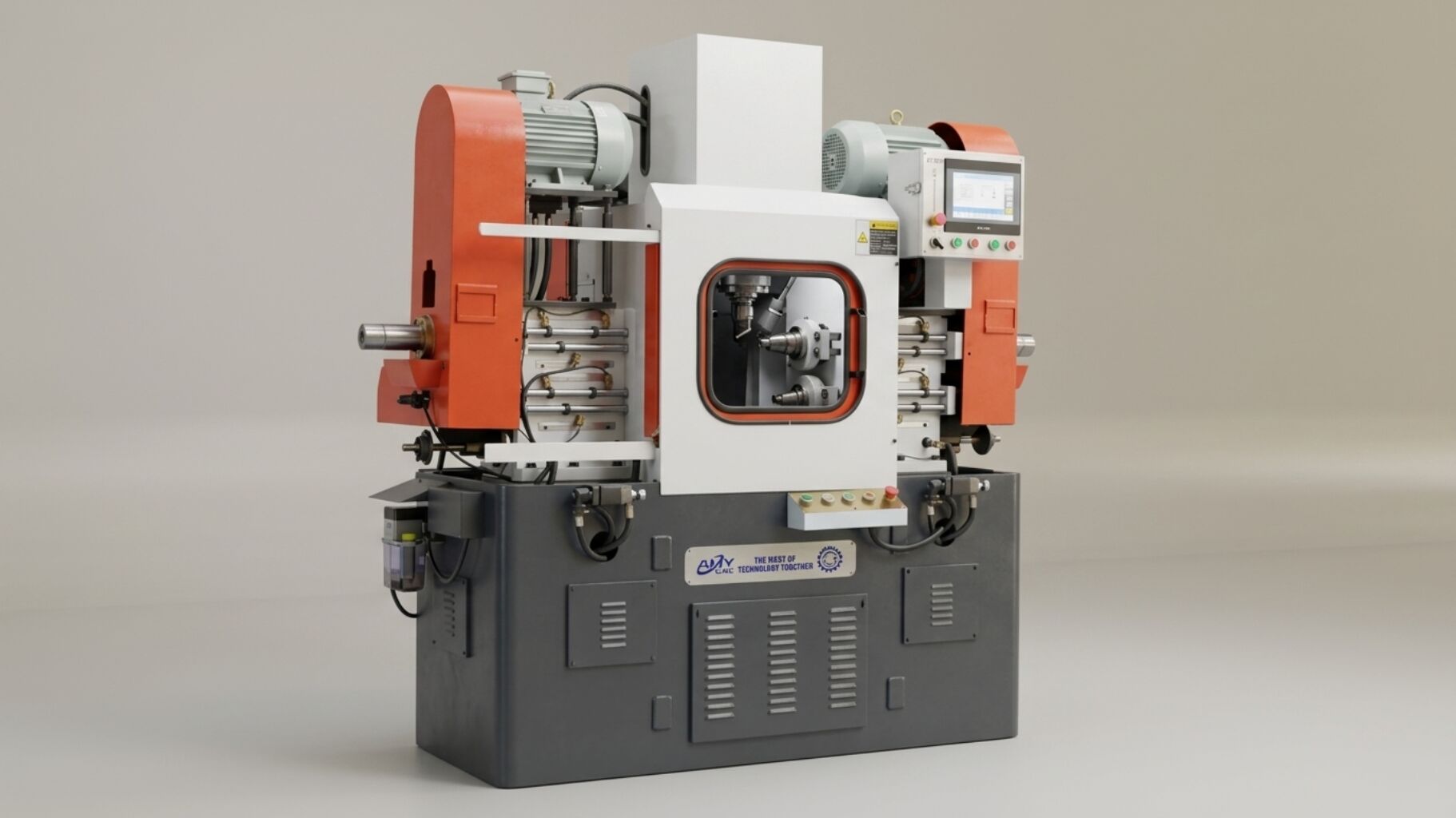
APEX HC-RZT Series: 8–12 station rotary transfer SPM for valve bodies & automotive components.
Step 1: Define Your Part Requirements
Identify the part families you will machine: valve bodies, compressor cylinders, automotive components. Note bore sizes, number of operations per part, and material (brass, aluminum, steel). The part geometry dictates the number of stations and the type of machining heads required. For complex multi-face parts, a rotary transfer machine eliminates multiple setups. → Explore APEX RTM configurations.
Step 2: Determine Cycle Time Targets
Calculate your required pieces-per-hour based on production volume. This determines the minimum number of stations and the complexity of machining per station. A 12-station APEX machine can often achieve 3–10× the throughput of a single-spindle CNC. For reference, our HCL300A gang-tool lathe achieves sub‑2s chip‑to‑chip time — a perfect complement for turned features.
Step 3: Evaluate Station Count Options
Match station count to part complexity: 8 stations for simpler parts or high mix, 10 stations for typical valve/compressor bodies, 12+ stations for complex parts with many operations. More stations allow for dedicated roughing, finishing, and auxiliary operations in parallel. Pro tip: Always leave one station for future process changes or in‑process gauging.
Step 4: Assess Control System Options
Siemens 828D is the industry standard for rotary transfer machines. Evaluate FANUC and Mitsubishi alternatives based on your team’s familiarity and service support in your region. The control system affects ease of programming, diagnostics, and future automation integration. APEX offers Siemens or FANUC as standard, with full remote diagnostic capability.
Step 5: Evaluate Supplier Service Infrastructure
Confirm local spare parts availability and service engineer presence in your region. Lead time, remote diagnostics capability, and warranty terms are key evaluation criteria. A machine is only as good as the support behind it. APEX provides 7×24h remote support and maintains critical spares in strategic hubs.
🔧 Recommended APEX Machines for Rotary Transfer Applications
HC-RZT Rotary Transfer SPM ⚡
8–12 stations, sub‑8s cycle time. Siemens/FANUC. Ideal for valve bodies & cylinders.
Explore specs →HC-RTB-25-K Dual‑Head CNC
Simultaneous dual‑end machining for gate valves. Perfect concentricity, double output.
View machine →HCL300A Gang-Tool Lathe
Sub‑2s chip‑to‑chip, ±0.005mm accuracy. High‑volume turned parts.
See details →📊 Why Buyers Choose APEX Over European Alternatives
| Criteria | APEX RTM ★ | European OEMs |
|---|---|---|
| Lead Time | 3–6 months | 8–14 months |
| Price | 30–50% lower investment | Premium |
| After‑Sales | 7×24h remote + local parts | Overseas dispatch required |
📚 Industry Data & External Sources
SME (Society of Manufacturing Engineers) — “Cutting Cost Per Part with Rotary Transfer Machines” (May 2021). Reports 10–20× cost-per-part reduction vs traditional CNC cells for high-volume parts. sme.org ↗
Production Machining Magazine — “Boosting Part-making Efficiency With Rotary Transfer.” Selection criteria: capability, flexibility, price. productionmachining.com ↗
GlobalSpec Engineering360 — “Transfer Machines Information.” Annual volume threshold for rotary transfer: 600,000+ workpieces with 4+ tools. globalspec.com ↗
❓ Frequently Asked Questions (Rotary Transfer Machine)
What is the typical cycle time for a rotary transfer machine?
APEX RTM machines achieve cycle times from 3.5 to 10 seconds per piece, depending on part complexity. For standard brass valve bodies, typical cycle time is under 8 seconds — up to 10× faster than sequential CNC machining.
Can I run different part families on the same rotary transfer machine?
Yes. Our modular fixture system allows rapid changeover between part families within 30–60 minutes. We recommend an 8‑station configuration for high‑mix shops.
What control systems are available?
Standard is Siemens 828D with ISO G‑code. FANUC 0i‑MF or Mitsubishi are optional. All include Ethernet and remote diagnostics.
How do I get an accurate cycle time estimate for my part?
Upload your CAD drawing (STEP/DWG) via our contact page. Our engineers provide a detailed cycle time analysis and tooling layout — typically within 48 hours.
🚀 Get a Free Custom Configuration & ROI Analysis
Upload your part drawing. Our engineers will propose an optimal rotary transfer layout, estimate cycle time, and calculate your cost-per-part — at no charge.
📎 Upload Drawing & Request Proposal →🔒 Strict confidentiality. NDA available.

APEX SPM · Specializing in high‑volume CNC machining & SPM design. 15+ years in custom machine tools.
View LinkedIn Profile →📖 Continue reading: Rotary Transfer vs 5-Axis CNC · Stop Bleeding Margin on Shop Floor · Full machine catalog