
Which workpieces and process route should be reviewed?
Large-part selection is controlled by more than X/Y/Z travel. Buyers should review weight distribution, loading, fixture access, spindle/tool reach, chip handling, measurement and how the machine will be delivered and installed.
- Large plates or bases with broad milling and hole patterns.
- Frames or fabricated structures requiring fixture and distortion planning.
- Molds or heavy components with deep features and tool-reach constraints.
- Parts requiring crane loading, on-table setup and documented acceptance.
Which inputs change the machine route?
| Envelope and weight | Provide dimensions, weight, center of gravity and required tool access. |
|---|---|
| Loading route | Define crane, forklift or fixture handling plus safe setup space. |
| Cutting route | State material, allowance, spindle/tooling needs and critical surfaces. |
| Acceptance | Define geometry, measurement method, test piece and installation conditions. |
What process sequence should buyers confirm?
- Review part size, weight, center of gravity and lifting points.
- Map roughing, finishing, drilling, tapping and boring operations.
- Plan fixture, support, distortion control and tool access.
- Define on-machine or external measurement and acceptance.
- Compare gantry model families only after project-level specifications are verified.
Which Tiezheng machine routes should be compared?
What visible evidence is available?
The MB18 image and video verify visible gantry-machine context. Exact travel, load, spindle, accuracy, cycle time and acceptance claims require model-level specification review.
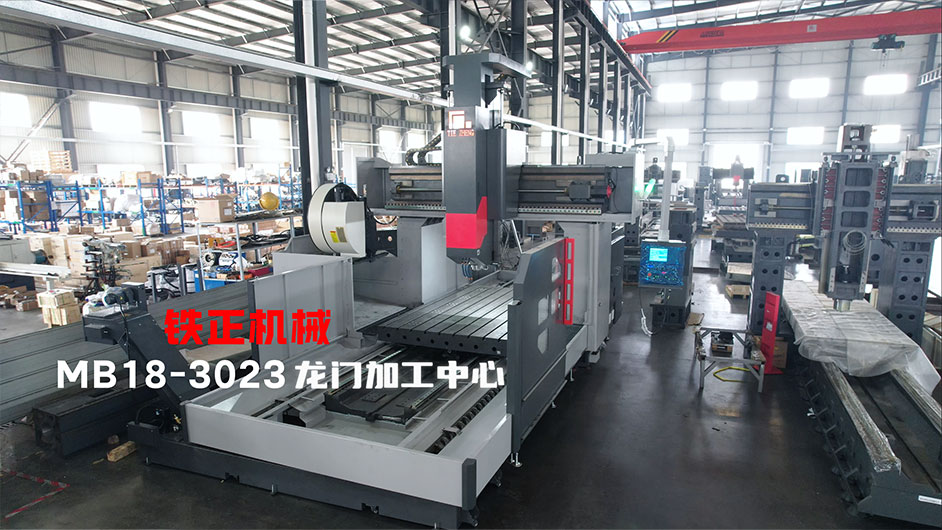
Review the MB18-3023 gantry machining center demo
Which quality risks should be discussed?
| Fixture and support | Define locating, support, clamp and distortion-control methods. |
|---|---|
| Tool reach and access | Mark deep, side or obstructed features and expected tooling. |
| Thermal and geometric acceptance | Specify measurement conditions, reference standards and test method. |
| Handling and installation | Provide lifting, foundation, power, access and destination constraints. |
What should buyers send with the RFQ?
- Drawing with overall dimensions, weight and center of gravity.
- Material, allowance, critical surfaces and required operations.
- Fixture, support, loading and lifting plan.
- Spindle, tooling, measurement and acceptance expectations.
- Destination, access, foundation, voltage, installation and service needs.
Buyer questions before machine selection
Is travel the only model-selection factor?
No. Weight, table/load arrangement, spindle/tooling, fixture, access, accuracy and installation constraints also matter.
Can the MB18 video prove exact capacity?
No. It verifies visible machine context; exact model data must be reviewed separately.
Why is the lifting plan part of an RFQ?
Large-part loading affects safety, access, fixture design, machine layout and installation.
What should an acceptance plan include?
The controlled features, measurement method, environmental conditions, test piece and documentation expected.
What is the next step?
Use the RFQ checklist to organize the drawing and production inputs, compare the linked machine routes, and then contact Tiezheng for an engineering review.